Dr. Mauk’s Boomer Blog

Each week, Dr. Mauk shares thoughts relevant to Baby Boomers that are aimed to educate and amuse.

Guest Blog:Technology in mobility, a smarter outlook!

In a world where technology seems to pervade every aspect of our lives, we take a look at how technology can make a positive contribution to care and making the lives of your loved ones easier and more dignified in later life.

Many people will be familiar with the term ‘Aids To Daily Living’.  This simply describes a category of products that do exactly what the term implies. Usually associated with smaller products that help in the home or the garden, these products are at the forefront in the push for technological breakthroughs as manufacturers look for the next big seller!

This relentless drive has meant that the Living Aids sector has grown massively from just a few lines of products in the early eighties, to quite literally thousands of product lines and growing today.

Examples of some Daily Living Aids include easy grip cutlery; can and bottle openers, long handled tools, the list is almost endless and there are new innovations being developed daily.

Technology has pushed the advancement of lightweight materials including new plastics, metals alloys and electronic components that have revolutionised many products. A good example of this is the walking stick, formerly made of cane in a one-size-fits-all configuration; the walking stick now has many types, materials, colours and setting options. Many of the enhancements have been borrowed from the world of high end sport, F1, military and even space!

Further evidence of this technological boundary breaking has been in the field of medical prosthetics where both mechanical engineering and state of the art electronics mean that disabled people are now receiving much greater movement options as bio and electronic systems become ever more intertwined.

The care sector has always been hungry for new technology, as most readers will be aware it is the smaller sometimes mundane tasks that affect our loved ones and that require specialist products that can help. The search for these products can be challenging but the internet can be a valuable resource to locate Daily Living Aids that can be most useful.

It is usually a good idea to start with the problem when looking for new products, i.e. ‘problems reaching high shelves’ – searches like this will often bring up some product based results and technology based answers. Another good resource is forums where new technology is discussed and you can canvas the experience of other product users.

A greater range of Daily Living Aids products can mean more independence as more tasks become available through the tools available. It can make a big difference to self-esteem as the person can continue to feel they can perform ordinary tasks, albeit with a little help in the right direction, and sometimes a little push to get them to adopt something new!

As with all technology, it will continue and this will mean that in the future we can look through to even more discoveries that can contribute to increased mobility and independent living of our loved ones; this can only be a good thing and is a great example of using technology in a positive way, for the benefit of all.

This post was written on behalf of Andrew Atkinson. Andrew is a director of mobility products specialists MobilitySmart and has written many articles on providing health and mobility tips .


By |2023-10-27T15:35:45-05:00November 20th, 2023|Dr. Mauk's Boomer Blog, News Posts|Comments Off on Guest Blog:Technology in mobility, a smarter outlook!

Guest Post: Why Mobility Aids Don’t Need to Be Used Long Term

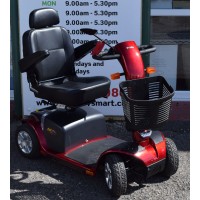
pic of mobile unit

There’s a common misconception that the moment you buy a mobility aid, such as a walking frame or mobility scooter, is the moment you give up your independence.

It’s easy to see why someone could feel like they’re giving in to old age, with stereotypes showing seniors that can’t do anything for themselves.

Take a look at things a different way. Instead of feeling like you’re giving up and accepting defeat, look at your mobility aid as a sensible choice for increasing independence and freedom.

Do they need to be a permanent fixture once you’ve bought them?

Nobody’s going to connect you to a mobility scooter, or fuse you to a walking frame. They don’t become a part of you, just because you’ve bought them. You’re free to use them as little or as often as you’d like. You might just use your mobility aid for long-distance walks or days out with the grandkids. Alternatively, you might decide that you need to use them every time you go to the store.

Aren’t some mobility aids too expensive for occasional use?

Mobility scooters certainly aren’t the cheapest things, but they’re a whole lot cheaper than a car! And they’ll probably do more for your overall independence, too.

There are ways to keep your costs down. If you’re confident that you need a mobility aid only in really rare circumstances, you might find that it’s cheaper to hire a mobility scooter than to buy one to keep at home. Some attractions, such as theme parks, offer mobility scooter hire. Otherwise, look for a company that specifically offers this service.

If you think that you’re going to need your mobility aid more frequently, but if you’re really not ready to commit to a high value purchase, you might find that buying used is the best option for you and your bank balance.

Pre owned mobility scooters cost a lot less than brand new ones, and if you buy from a reputable company then they should be professionally refurbished, serviced and checked.

Alternatively, if you’re planning to use your mobility scooter almost daily, it’s probably worth buying brand new. That way, you’ll get the longest possible lifespan combined with the newest features, and premium manufacturer support.

Is a mobility scooter always the best choice?

If you’re really struggling to get around then a mobility scooter could be the best purchase for you. They can be used to travel over relatively long distances, comfortably and easily, and are for indoor and outdoor use.

If you simply need a little support to walk on your own two feet, crutches, a walking stick or a walking frame might be a better choice.

Wheelchairs, including electric wheelchairs, have always been a popular option. It’s worth noting, however, that these don’t have the same sturdy build as a mobility scooter and won’t be so good on bumpy surfaces or long-term outdoor use.

Whatever you choose, feel free to use your mobility aid one day and set it aside the next. There are no rules as long as you’re happy with your investment.


Mobility Smart is an online retailer stocking a wide range of mobility aids and daily living aids, including new and used mobility scooters and other walking aids for people with limited mobility. Click here to find out more.

By |2023-10-27T15:35:25-05:00November 18th, 2023|Dr. Mauk's Boomer Blog, News Posts|Comments Off on Guest Post: Why Mobility Aids Don’t Need to Be Used Long Term

Guest Blog: Places to Visit in Dubai for Senior Citizens

Introduction

If you are a senior citizen, then you must know that Dubai is the perfect place to visit. This is one of the most popular tourist destinations in the world and has everything you need to have an amazing time. Not only is it filled with beautiful buildings and attractions, but it also has great weather all year round and you can get discount tickets for Dubai attractions! You’ll never run out of things to do here in Dubai; there are plenty of museums, restaurants, hotels and malls to explore when visiting this amazing city!

Burj Al Arab

The Burj Al Arab is located in Dubai, United Arab Emirates. To get there, you can take a taxi or drive yourself.

The hotel has 730 rooms and suites, all of which are decorated with opulence and luxury in mind. The hotel is also known for its 5-star restaurants that serve traditional Arabic cuisine as well as international dishes such as steak tartare or duck confit salad. Other facilities include a spa offering facials and massages; an indoor swimming pool; an outdoor tennis court; a gymnasium with personal trainers on hand to assist guests who wish it; underground parking space for cars (or other vehicles); room service available 24 hours per day; free Wi-Fi throughout the entire building–and much more!

Dubai Festival City Mall

Dubai Festival City Mall is a great place to visit if you’re looking for something that has it all. It has a number of restaurants, cafes and shops, as well as cinema, bowling alley and roller skating rink. There’s also an indoor play area for children called Kidzania where kids can work in different professions such as doctor or chef.

The Dubai Mall

The Dubai Mall is one of the most popular places to visit in Dubai. It’s located at the heart of Downtown Dubai, which makes it easy to get there by public transport.

The mall has more than 1,200 stores that offer everything from clothing and jewelry to cosmetics and electronics. It also has a variety of dining options including food courts, fine dining restaurants and cafés. There are also plenty of entertainment options including an ice rink where you can skate during winter months (December through February). If you’re feeling adventurous try out one of their roller coasters or go on one of their rides like “The Falcon”. The mall also hosts events throughout the year such as concerts by international artists so check out their website for more details!

Sharaf DG Mall

Sharaf DG Mall is located in Al Quoz and is a popular destination for senior citizens. The mall has a wide range of shops and restaurants, as well as an ice skating rink, laser tag arena and bowling alley.

The mall stays open 24 hours a day, seven days a week so there’s no need to worry about your elderly parents getting bored or hungry while they’re there! It also has plenty of space for them to sit down if they want to rest their legs after walking around all day long (or even just popping out quickly).

There’s an underground car park at the back of the building which makes it easy for you or other family members who may be with them when visiting this beautiful place 🙂

The Wild Wadi Water Park

The Wild Wadi Water Park is the perfect place for families and friends to spend a day. There are so many slides and rides that everyone in your group will find something they enjoy. The park also has food and drinks available, so you can keep your energy up while you’re having fun!

The park is open from 9am-6pm daily (except Fridays), though it does get busy at weekends so it’s worth booking tickets online if possible. Entry costs AED120 for adults and AED90 for children ages three-12 years old.

These are some of the places you can visit with your senior citizen relative.

There are many places to visit in Dubai, and you should take your senior citizen relative to them. You can also do other activities, like go shopping or eat at a restaurant. Some good places to stay are the Burj Al Arab Hotel, which has a very nice pool with dolphins; the Jumeriah Beach Hotel (it has a great view of the ocean), or even just staying at home!

Conclusion

We hope that this list has inspired you to visit some of the best places in Dubai for senior citizens. If you have any other suggestions, please let us know!


By |2023-10-26T10:46:11-05:00October 26th, 2023|Dr. Mauk's Boomer Blog, News Posts|Comments Off on Guest Blog: Places to Visit in Dubai for Senior Citizens

Amputation

handicapped sprinter

Background

Amputation is an acquired condition that results in the loss of a limb, typically from disease, injury, and/or surgery. There are approximately 278,000 new amputees each year in the United States (Amputation statistics, 2012). Seventy-seven percent of these cases are from circulatory problems, particularly peripheral vascular disease (PVD) related to diabetes, while most of the rest are due to trauma.

Warning Signs

Most amputations involve the lower limbs, above or below the knee. The greatest risk factor for amputation is diabetes with peripheral vascular disease, with African American men having a 2.3 times greater rate of amputation than Whites with diabetes. Advanced age and the incidence of diabetes in the elderly make this a potential problem in the older age group. Additionally, a recent study showed that HgbA1c level was a significant predictor of foot amputation (Palmer, et al,et al., 2011).

Diagnosis

In the acute phase of recovery after surgery, it is important to prevent contractures of the knee joint and maintain normal muscle power and range of motion in remaining joints. The limb should not be hung over the bedside or placed in a dependent position. Both in acute care and rehabilitation, the stump should be conditioned to prepare for the wearing of a prosthesis (an artificial limb). In certain cases, an older person may choose, after speaking with the doctor, not to wear a prosthesis. But, this is usually only when there are other health problems, such as poor balance from another disease or disorder that would make falling and injury more likely with the use of an artificial limb.

Treatment

Initially, there may be drainage from the surgical site, and a sterile dressing will be kept in place and changed at least daily. Eventually, the staples or sutures will be removed and a thick, black eschar (like a hard, dark scab) will form at the amputation site and gradually come off. An Ace wrap or stump shrinker sock (elastic) is used to help prepare the stump for wearing a prosthesis. Several factors should be considered when preparing the stump to wear this artificial limb. These include a movable scar, lack of tenderness/sensitivity, a cone shape, firm skin, and minimizing any swelling. All of these can be achieved by proper wrapping of the stump. The prone position (laying on the stomach), if tolerable, is an excellent way to promote full extension of the residual limb.
It is also important for the person to begin therapy right away. Persons wearing a prosthesis use more energy to walk. An older person with an artificial leg generally has a 40% decrease in speed but uses 80% more energy to walk than the average healthy adult (Chinn et al, 2005).

When using the prosthesis at first, an older adult may tire easily. Be sure to take into account any coexisting problems, such as heart of lung disease, when considering energy expenditure. However, the newest technologies allow prosthetics to be light, durable, and more comfortable.

Patients and families will need to learn about stump care, mobility, adaptation, coping, and self-care. Home maintenance, dealing with complications and/or additional health problems, wear and tear on non-weight-bearing joints, adapting to the environment, accessibility, stigma, depression, role changes, decreased energy, and chronic pain are all issues to be aware of related to amputation. It is likely that the person with a leg amputation will experience some shoulder problems over time due to the additional stress on the non-weight-bearing joints. Phantom limb pain, or pain sensations in the nonexistent limb, is more common after traumatic amputations and may last for weeks after amputation. Massage and medications may help with this type of pain control (Beers, 2005). Additionally, proper wrapping of the stump (in a figure-eight wrap) may help decrease the chance of phantom limb pain later (Kalapatapu, 2012). Also, people with an amputation may struggle with difficult feelings about the changed appearance of their body. They might worry if their spouse or loved ones will see them differently. They might fear what others will think and worry about getting their life back to what feels normal.
In general, older persons with amputation may return to a normal quality of life with some adaptations. The care provided by nurses and physicians in rehabilitation after amputation may make the difference in the person’s ability to cope with the changes that result after surgery. Nurses can help with the transition back into the community after amputation by educating patients and families about resources to assist with adaptation.

Adapted from Mauk, K. L., Hanson, P., & Hain, D. (2014). Review of the management of common illnesses, diseases, or health conditions. In K. L. Mauk’s (Ed.) Gerontological Nursing: Competencies for Care. Sudbury, MA: Jones and Bartlett Publishers. Used with permission.

[call_to_action title=”For More Information Visit” tag_line=”Amputee Coalition” arrow=”yes”]

For more information on Amputation, visit The Amputee Coalition at:
http://www.amputee-coalition.org/

Download this care page as a PDF: Amputationkme
[/call_to_action]

Amputationkme

By |2023-09-30T17:20:28-05:00October 20th, 2023|Dr. Mauk's Boomer Blog, News Posts|Comments Off on Amputation

Total Knee Replacement


Background

Similar to hip replacement, knee replacement is done when a person is experiencing decreased range of motion, trouble walking or climbing stairs, and increased degeneration of the joint so as to impair quality of life. This most often occurs as a result of arthritis.

Treatment

Total knee replacement (TKR) surgery involves resurfacing or removing the distal portion of the femur that articulates with the end of the shin bone. The prosthesis consists of metal and plastic or similar materials that are cemented onto the newly resurfaced areas of the articulating bones. Although often done under general anesthetic, this surgery can also be performed under spinal anesthesia. Sometimes blood loss is significant, so patients may be asked to donate their own blood ahead of time to be given back to them in the event it is needed. In addition, a growing trend is toward bilateral knee replacement in those persons requiring both knees to be surgically repaired. The benefits of this are the one-time operative anesthetic and room costs, and many physicians feel recovery from bilateral replacement is similar to single replacement. However, the pain and lack of mobility, as well as the significant increase in the assistance needed after surgery when a bilateral replacement is done, may make this less than ideal for older patients. Surgical procedures for TKR have not evolved quite as rapidly as total hip arthroplasty.

Discomfort after knee surgery is generally severe in the first few days. Complications after surgery may occur, including pain, infection, and blood clots. Patients may use cold packs on the operative area and take pain and sleeping medications as ordered. In addition, alternative therapies such as guided imagery have been shown to help with pain management (Posadzi & Ernst, 2011). Many joint replacement patients feel a loss of control and independence.

Therapy will begin immediately in the acute care hospital. Although weight bearing does not usually occur until 24 hours after surgery, sitting in a chair and using a continuous passive motion machine (CPM) (if ordered), will ease recovery. The use of a CPM is generally based on the surgeon’s preference. There is research to support it, as well as studies indicating that walking soon after surgery has an equal effect and makes the CPM unnecessary. However, in cases of an older person who may not have the mobility skills initially after surgery that a younger person would, a CPM may be beneficial to keep the joint flexible and decrease pain.

Dr. Zann (2005) indicated that “patients undergoing total knee replacement do not achieve their maximum improvement until 2–4 years” (p. 1). This is attributed to the lack of muscular structures that surround and protect the knee and the need for the ligaments and tendons to adapt to the indwelling prosthesis. Recovery times vary and depend upon a number of variables, including the patient’s overall health, age, other preexisting health issues, and motivation. Patients report that the new knee joint never feels normal even years after the surgery, but that they experience an increase in function and generally much less pain than before.

Patients should be educated about signs and symptoms of infection, care of the surgical site (if staples are still present), pain management, and expectations for recovery. A range of motion from 0–90 degrees is the very minimum needed for normal functioning. Normal knee flexion is 140 degrees, but few older persons would get this amount of flexion after surgery, and may not have had full flexion even prior to the operation. After discharge, a walker is usually used in the first few weeks, followed by light activities 6 weeks after surgery. In addition, the patient’s spouse may experience feelings of being overwhelmed due to role transitions that occur after surgery and during the recovery period (Walker, 2012 ). Newer knee prosthetics are still going strong for the majority of patients 15 years after surgery.


By |2023-08-25T18:57:34-05:00September 15th, 2023|Dr. Mauk's Boomer Blog, News Posts|Comments Off on Total Knee Replacement
Go to Top