seniors

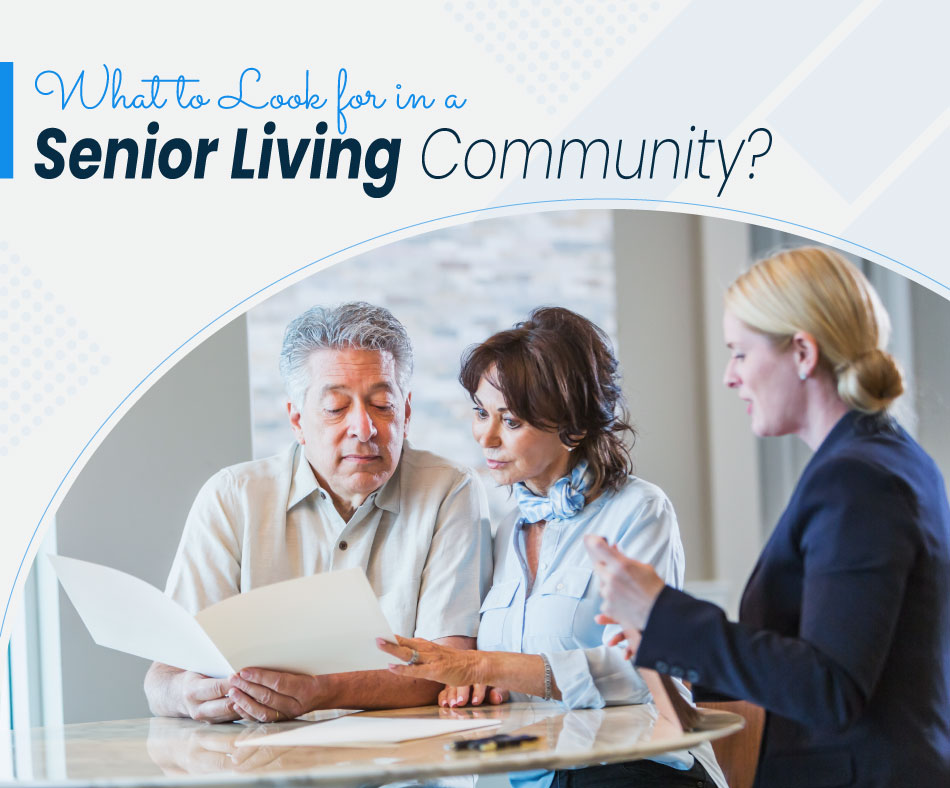
Guest Blog: What to Look For in a Senior Living Community

Before you look up a senior living community or Google personal care homes near me, you should first get to know about the common options available for where your aging parents can reside.

Below are the most popular and preferred options to pick from –

  • Independent Living – This type of living is good for the elderly who can largely function independently with occasional medical care required. Medical care is provided in collaboration with hospitals or medical establishments. Typical services include accommodation, laundry, transportation, housekeeping, and other amenities like pool, concierge service, library, fitness center, etc.
  • Assisted Living Assisted living centers, in addition to accommodation also provide onsite health care and help with ADLs like dressing, bathing, and medication management so residents can live independently. The setting is very home-like without the residents having to worry about maintenance, cooking, or cleaning. There’s round-the-clock supervision available.
  • Memory Care – This facility is specifically designed to treat and care for people with dementia or Alzheimer’s. The staff is medically trained to handle their special medical needs. The rooms and buildings are structured to avoid wandering. Supervision is available all the time with plenty of programs for socialization. There are housing and laundry services along with an emergency medical call system.
  • Enhanced Living – You can think of this facility as a move up from Independent living with a whole lot of extra services available.


Things To Look For In A Senior Living Community

Senior Living Culture

Now the living culture is not something that you define in words. It’s mostly just a feel or a vibe that you pick up on. At times, you just know it when you visit the facility. Other times it’s a hunch of an intuition.

To truly assess the culture, it’s better if you call up your list of communities and visit them one by one. Observe the residents and see if they seem happy. How is the staff? Are they polite to respond? Is the overall energy of the place happy? Ask for social activities to keep the residents happy.

Lifestyle & Wellness

Lifestyle and wellness largely depend on the social calendar of the place. So, be sure to look at those activities as well as exercise, health, and wellness programs. Make sure to ask about how often the residents are allowed to go out for activities.

What about housekeeping and laundry services? How often are friends and families allowed to visit? Is there a dedicated private or common area for family get-togethers? What about pets? Are they allowed?

Staff and Care

How many staff members are present at the facility? Are the staff members nice to interact with the residents? Do they seem polite? What kind of help can you expect from them? Is the medical staff made to undergo regular training to update their knowledge?

What’s the mode of communication for updating families on the health updates of the residents? Also, how quickly can you expect your questions to be answered? What kind of care is available for residents with special medical issues such as diabetes, memory, or mobility issues?

What’s Food Like?

Food is a huge part of staying healthy during old age. So, this is something you must not overlook. If possible, arrange for a tour of the mess/kitchen. Look into how the food is prepared. Are the conditions there hygienic?

What about the food menu? Does it look interesting? Is it extensive and accommodates special dietary restrictions such as gluten-free and vegan-friendly foods? What are the dining hours like and is there food sampling available?

Extra Amenities

It’s not uncommon for people to get stuck between two close contenders. Sometimes two communities can look exactly the same; making it difficult to pick one. When faced with such a dilemma it’s often the extra amenities that help you make the right choice.

See if the laundry and housekeeping services are free. Some facilities charge extra for those. Look into community events, transportation, or socialization activities. Anything extra is a good thing to consider.

History and Reputation

How long has the community been in business? For how long has the management been with the community? What about the staff? For how many years they have been working there?

One of the best things to discern all this and more is to go online. Check out reviews and see what they have to say. Pay attention to how the community has responded to negative reviews. Only avoid the community if you come across something disturbing like bad handling of residents or complete neglect on part of the staff.

Bottom Line

Selecting the right living community for your senior can seem like a daunting task. But, if you invest a little bit of time and effort, it should be a cakewalk.

By |2023-11-20T17:13:57-05:00December 3rd, 2023|Dr. Mauk's Boomer Blog, News Posts|Comments Off on Guest Blog: What to Look For in a Senior Living Community

Guest Blog: Tips For Preventing Falls Among The Elderly

Falls among seniors are more common than you think.

According to the Centers For Disease Control and Prevention, nearly 36 million older adults suffer a fall each year.

Our muscles lose strength, and our balance and coordination decline as we get older. As our senior loved ones are already at a certain age, they are now more prone to falls, and it could only get worse as they get on in years.

However, we can take steps to keep our seniors from suffering falls. Here are some tips on how to prevent falls among the elderly.

Declutter

Make sure your parent’s or grandparent’s space is clutter-free. You can’t have random stuff lying all over the place, becoming a tripping hazard for seniors. The floors that your elderly loved one walks on should always be clear, with nothing to step, slip, and trip on.

Put Up Grab Bars & Handrails In Strategic Spots

Seniors can use additional support when walking around the house. So, it would be great if the hallways, bathrooms, and stairways are fitted with handrails and grab bars.

Add More Lights

Our seniors typically have poor eyesight, which can only get worse under poor lighting conditions. By installing additional lights (and brighter ones at that), seniors will have a better chance of seeing and avoiding tripping and slipping hazards as they go about the house.

Use Only Non-Slip Mats & Rugs

All the mats and rugs in the house should be the non-slip type or secured to the floor.

Get Them To Exercise Regularly

Regular exercise is crucial to keeping the muscles, bones, and sense of balance of our seniors strong. Walking, lifting light weights, climbing stairs, or doing something as simple as standing on one leg for a minute or two can already help them stay as fit as possible. The fitter they are, the lower their risk of suffering a fall.

Tell Them To Be More Careful

Sometimes, seniors fall because they try to move too fast when walking across the room or getting out of bed. Tell them they need to be more careful when doing so and always move at a more comfortable pace.

Falls don’t have to be synonymous with getting older. By taking the necessary precautions, our seniors stand a better chance of avoiding them.


About the Author

 Melissa Andrews is the Content Marketing Strategist for Paradise Living Centers, an assisted living center for seniors with locations in Paradise Valley and Phoenix, Arizona. In her spare time, she enjoys cooking and going on hiking trips with her siblings and cousins.


By |2023-11-20T17:13:32-05:00December 2nd, 2023|Dr. Mauk's Boomer Blog, News Posts|Comments Off on Guest Blog: Tips For Preventing Falls Among The Elderly

Guest Blog: How the Internet Has Changed How Society Cares for Seniors

Today’s technology is not only for the young. The digital age has brought with it innovations which aim to benefit seniors. A new age of Internet of Things (IoT) devices has made senior care better, more efficient and less costly. It aims to eliminate isolation, which has been a major concern for many years. It has provided caregivers in the healthcare industry a tool to allow seniors to be more independent and remain connected with friends and family.

When it comes to senior care, the IoT is revolutionizing the way seniors are living their lives. Assisted living communities are using the internet to connect and humanize senior care. Communities such as the K4Community leverage technology to make seniors’ life simpler, healthier and happier. These communities integrate IoT wearables such as watches or belt clips. They also have floor sensors that provide real-time monitoring to prevent falls and other injuries. Other types of sensors monitor heart rate, blood pressure and oxygen levels to immediately alert caregivers when there’s an emergency.

To lead a healthy, active lifestyle, IoT devices go beyond the standard activity trackers. Devices are more targeted towards the individual’s needs, alerting them when to rest, whether they’re standing up or down too fast and when to give their knees a break. Food and hydration is also considered, with wearables reminding seniors when it’s time to eat and how often to drink to maintain proper hydration. When it comes to sleep, sensors can also alert caregivers whether a senior needs help getting in and out of bed. With the internet being all about connection, keeping seniors in contact with friends and family is one of the best things the IoT can provide to improve senior health. Seniors are spending more time online, using social networks and other platforms to connect with loved ones.

This trend is only going to get more prevalent. Research shows that using the internet makes people happier and increases life satisfaction, especially for seniors. A study published in the Journal of Computers in Human Behavior shows that life satisfaction was much higher among seniors who use the internet than those who don’t. The ability to keep in touch and prevent the cycle of loneliness and isolation in an advanced age has done more for senior health than any medication. It is no wonder then that internet use among seniors rose from 8% to 34% between 2003 and 2012, as cited by the Journalist’s Resource. The empowerment that the internet and technology have given seniors is invaluable to their health. Such developments revolutionized the way society and healthcare providers care for the elderly.

With Baby Boomers contributing to an increasingly aging population, the need for caregivers and connected assisted living communities is becoming greater than ever. In order to provide quality healthcare to seniors, healthcare is not just about technology but also about the people who provide it. Maryville University details how general healthcare workers can specialize in senior services to provide care for an aging population. Healthcare and senior care are becoming two of the fastest-growing industries. Boosted with the aid of technology and IoT devices, they provide a way to create a better quality of life for seniors, while reducing the costs of healthcare at the same time.

Article submitted by Tanya Olivers

By |2023-04-27T16:02:44-05:00May 10th, 2023|Dr. Mauk's Boomer Blog, News Posts|Comments Off on Guest Blog: How the Internet Has Changed How Society Cares for Seniors
Go to Top